
 Opinion Leaders
Between Regulation and Returns – Insights from the Healthcare Market
-
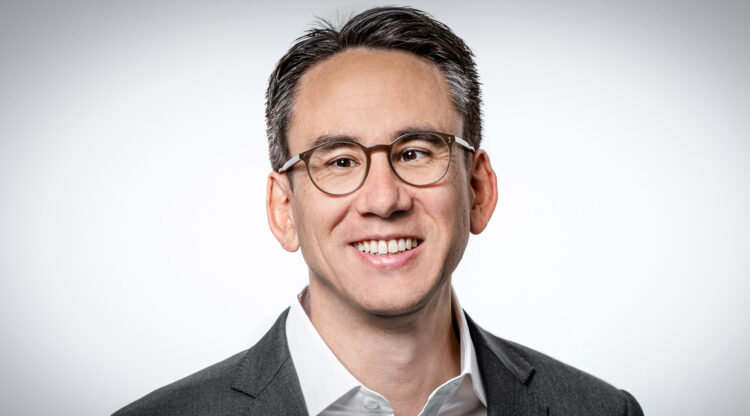
Terence McManus
Portfoliomanager
Bellevue Asset Management AG
While tariffs cause some concern, we believe the majority of healthcare companies have the capital, flexibility and margins to cope with the changing environment.
Following the market disruptions triggered by erratic US tariff policy, we speak in this interview with portfolio manager Terence McManus about how the healthcare sector has held up amid this volatility and where it currently stands against a backdrop of persistent political, regulatory, and macroeconomic uncertainty. We also discuss how the Bellevue Diversified Healthcare Fund (LU2441706764), which recently celebrated its three-year anniversary, is strategically positioned to navigate uncertainty and capture long-term growth potential.
The healthcare sector had a strong start to the year, outperforming the broader market. Then came the market turmoil in April, triggered by President Trump’s tariff announcements — tariffs which have since been largely withdrawn. How has the healthcare market held up in this environment?
While there has been a lot of market volatility, and healthcare-specific noise or tweets, the sector has actually performed in-line with global equities since «Liberation Day» (April 2; -5.3% for global equities and healthcare to April 11). Given the level of sector-specific noise around the FDA and separately tariffs, this may be a little bit surprising! But at a sector-level, there is considerable diversity, which has helped the sector performance as we move through various market level rotations. The sector is now down modestly on an absolute basis year-to-date (-1.4%), but is still a significant outperformer versus broader markets (global equities; -6% YTD).
In light of the persistent instability across politics, regulation, and the macroeconomic environment, how would you characterize the healthcare sector’s current standing? And how is the industry reacting to these ongoing developments?
While pharmaceuticals are current exempt from tariffs, we expect some form of reform to come in the next few weeks. This is somewhat confused by transfer-pricing, but the goal is to bring manufacturing back to the US. The Trump Administration sees this as attractive give these are high-value manufacturing jobs, and also they see an national security angle. Moving some more manufacturing back to the US is not a big issue for the large pharma, although it would take many years. Johnson & Johnson, Eli Lilly, and Novartis have recently announced new manufacturing projects in the US.
In addition, we suspect that the Trump Administration is also looking at ways to bring down US drug prices. This could be in the form of bringing back the President Trump’s original idea of a most-favored-nation (MFN) approach. But for now, we really don’t have enough information to comment.
The impact of tariffs on non-drug healthcare is similar to other sectors, with the advantage of comparatively large margins.
Nevertheless, we need to take a step back. With risks rising, and future US economic growth questioned, we still see the earnings and cash flows provided by healthcare companies as likely more predictable than most other sectors. This is in line with the sector’s core characteristic, which is inelastic demand for its products and service. A little bit of clarity on the pharmaceutical-tariff-side should reinforce this thesis.
Supply chain disruptions have already challenged many industries and are expected to intensify further. How do you assess the impact on healthcare companies, particularly in medtech and biopharmaceutical manufacturing?
We actually identify supply-security is an important thematic within healthcare. As drugs and devices have become increasingly more complex, so have their manufacturing requirements and often their supply chains. While tariffs cause some concern, we believe the majority of healthcare companies have the capital, flexibility and margins to cope with the changing geopolitical environment. When we think about the more complex drugs, these are often produced in high cost of living countries, such as the US, Switzerland, and the UK. As such, for biologic manufacturing, tariffs would shift where the incremental capex dollars are spent. In addition, we actually see opportunities within the contract manufacturers, some of which have excess capacity standing ready for utilization within the US.
How did you manage your portfolio during the recent turbulence?
We live by the fund name, and run a very diversified global healthcare fund. We are in a good position because the healthcare sector contains a spectrum of investment opportunities, from disruptive style-growth companies in China, to defensive mega-caps in Europe. We have maintained our broad exposure to subsector, style and geography. This has helped us navigate the recent turbulence.
Looking further ahead, how would you assess the healthcare sector’s resilience relative to other industries?
The healthcare sector benefits from inelastic demand for its products and services. For much of the earnings generated by healthcare companies, patient demand is not discretionary. If you have a cardiovascular event or are diagnosed with cancer, you seek medical assistance irrespective of the economic or political situation. We saw minimal demand or funding declines in healthcare during prior economic downturns, and do not see this as in the interests of any government to significantly disrupt the supply of healthcare products to their populations. Therefore we see persistent supply and demand for healthcare products and have high confidence that companies in this sector can continue to deliver positive value for patients and shareholders.
Looking at the investment strategy, your portfolio emphasizes «high-conviction» titles. What criteria do you use to identify these companies, and how do you manage risk in such concentrated positions?
We have a team of portfolio managers and analysts who build bottom-up detailed analysis of companies. We regularly speak to company management and attend medical conferences. We use a mixture of industry specific key performance indicators (KPIs) and valuation metrics to identify high-quality companies with reasonable valuations. This drives our high-conviction stock selection process.
How do you balance investments between established pharma giants and smaller, high-growth biotech firms, as well as companies in the non-drug space such as medtech und healthcare services, to capture both stability and innovation?
We pick stocks based on their individual fundamentals and the strength of their end-markets. We seek innovation across a broad spectrum of healthcare markets and opportunities. It is great for investors that we have a breadth of different types of stocks to invest in within healthcare, and that these often perform differently at different points in the economic cycle. We see this diversification of opportunities as a core strength of the sector and the Bellevue Diversified Healthcare Fund. For stability and risk control, we monitor geographic, subsector, size and style exposures. We try to maintain a balance across factors within certain tolerances, to ensure diversity and stability of the fund. This way we can hold high-conviction views on single business models or specific end-markets, while maintaining a diverse set of market or factor exposures within the portfolio.
Do you anticipate further consolidation within the healthcare sector, particularly in biotech, as larger players seek to enhance their pipelines through acquisitions?
We see the demand, capital, and regulatory environment for further consolidation within the healthcare sector. This is likely to be through bolt-on acquisitions, rather than mega-mergers which have traditionally been seen as value destructive. We are still hopeful that 2025 could be a bumper year for M&A in the sector, but this could be more second-half loaded given the near-term uncertainties. Indeed, stimulated by potential tariffs, it is possible that some of the larger companies may want to buy alternative geographic sales and manufacturing capabilities.
Looking ahead, what are the key themes and growth drivers you believe will shape the healthcare investment landscape in the next 12-24 months?
Healthcare offers a rare mixture of defensive and innovation/growth characteristics. This is a global sector that can perform in multiple parts of the economic cycle. Given the uncertain economic and geopolitical environment, we see diversification as the key attribute for investing in healthcare over the next 12-24 months. We are moving through a period of heightened uncertainty; therefore we would advocate investing with conviction in the highest quality companies across healthcare but remain disciplined with risk monitoring to ensure diversification across subsector, style, company size and geography. We like disruptive innovation and want to flexibly participate in key healthcare thematics, but we also value the security of established defensive quality names that offer stable cash flows and growing dividends.
__
Disclaimer
This press release is issued by Bellevue Asset Management AG, which is an authorized asset manager subject to the supervision of the Swiss Financial Market Supervisory Authority (“FINMA”) and acts as an Investment Manager of the Bellevue Funds (Lux) SICAV. Bellevue Diversified Healthcare Fund is a subfund of Bellevue Funds (Lux). The information and data presented in this press release are not to be considered as an offer to buy or sell or an invitation to subscribe any securities or financial instruments. For potential investors in Singapore Investment returns may increase or decrease due to exchange rate fluctuations. The fund(s) is not authorised or recognised by the Monetary Authority of Singapore (the “MAS”) and its shares are not allowed to be offered to the retail public. The Sub-Fund is a restricted scheme under the Sixth Schedule to the Securities and Futures (Offers of Investments) (Collective Investment Schemes) Regulations of Singapore. This press release is not a prospectus as defined in the SFA and accordingly, statutory liability under the SFA in relation to the content of prospectuses does not apply. The MAS assumes no responsibility for the contents of this Information Memorandum. You should consider carefully whether the investment is suitable for you and whether you are permitted (under the SFA, and any laws or regulations that are applicable to you) to make an investment in the Shares. If in doubt, you should consult your legal or professional advisor. This Information Memorandum has not been registered as a prospectus with the MAS. Accordingly, this Information Memorandum, the Prospectus and any other document or material in connection with the offer or sale, or invitation for subscription or purchase, of Shares may not be circulated or distributed, nor may Shares be offered or sold, or be made the subject of an invitation for subscription or purchase, whether directly or indirectly, to any persons in Singapore except in accordance with the restrictions and conditions under the SFA. By subscribing for Shares pursuant to the exempt offer under this Information Memorandum, you are required to comply with restrictions and conditions under the SFA in relation to your offer, holding and subsequent transfer of Shares.
Hongkong: This section has been prepared solely for Hong Kong investors who invest or propose to invest in Shares of Bellevue Funds (Lux) (the “Company”) in Hong Kong. Investors in Hong Kong should read this supplement in conjunction with the Prospectus for the Company (the “Prospectus”). References to the Prospectus are to be taken as references to that document as supplemented hereby. In addition, words and expressions defined in the Prospectus, unless otherwise defined below, shall bear the same meaning when used herein.
Prospectus, Key Information Document (“PRIIP-KID”), the articles of association as well as the annual and semi-annual reports of the Bellevue Funds under Luxembourg law are available free of charge from Bellevue Asset Management AG, Theaterstrasse 12, CH-8001 Zürich