
 Interviews
Controlling Concentration Risk Using ETFs and Funds
-

Susan Niederhöfer
Chefredakteurin
Jamie Dimon said that a recession in 2026 is possible – but he isn’t worried. How does the current situation differ from previous crises, such as in 2022, in terms of inflation and monetary policy?
Galler: The current situation differs in a number of ways from the crisis year of 2022, when the war in Ukraine also gave rise to energy concerns. As far as inflation risks are concerned, we are not on the same playing field as in 2022. Whilst central banks were caught off guard by inflation at zero interest rates back then, real interest rates are positive today, wage growth is slowing and inflation trends are fundamentally on the decline. Nevertheless, the second quarter of 2026 marks a turning point: At the start of the year, the expectation for this year was still that the economy would receive massive support, both fiscally and monetarily through interest rate cuts. This tailwind will now be significantly weaker. This is because inflationary risks are certainly mounting: inflationary pressure from energy prices is severely limiting central banks’ scope for interest rate cuts, which dampens the hoped-for monetary boost.
Consumers and investors are currently feeling unsettled due to the Iran conflict. Can active ETFs offer added value in light of the escalation?
Durdevic: Active ETFs offer a decisive advantage, particularly in times of geopolitical tension such as those currently surrounding the Iran conflict: they enable fund managers to react flexibly and quickly to new market developments. Whilst passive ETFs rigidly track an index, active managers can specifically manage risks and capitalise on opportunities – for example, by overweighting or underweighting individual stocks, as well as sectors or regions. In volatile market phases, such as those triggered by geopolitical crises, this flexibility can help to limit downward movements or capitalise on recovery potential at an early stage.
Active ETFs are often seen as a substitute for passive index exposure or as an alternative to traditional funds. However, studies show that over three-quarters of investors have so far used them merely as a supplement to their portfolios. What strategy is J.P. Morgan AM pursuing to establish active ETFs more firmly as a core investment?
Durdevic: We offer a wide range of active ETFs that are explicitly suited as core components for strategic asset allocation. One example is our Research Enhanced Index (REI) strategies, which impress with their broad diversification, low tracking error, and consistent outperformance with a proven track record. These have mostly been used to diversify previously purely passive allocations and, thus, to revitalise passive investment strategies. But fundamentally, they offer similar characteristics to pure index trackers on MSCI World etc., just with the chance of additional returns.
It is made even easier with our three multi-asset strategies, available since the start of the year, which are tailored to different risk profiles: these Strategic Allocation ETFs invest in a globally diversified portfolio of our proven active equity and bond ETFs. Allocation is based on our “Long-Term Capital Market Assumptions” research, which has been tried and tested over three decades and has previously been used primarily for institutional asset allocation, combined with a disciplined rebalancing process. This enables us to provide particularly easy access to broadly diversified, actively managed portfolios – within an efficient ETF-of-ETFs structure. Our aim is to convey to investors the benefits of active ETFs as long-term core investments – through targeted education, the dissemination of financial knowledge, and the development of products that can usefully complement or replace traditional index exposures.
Gold is shining, but how do equity investors benefit from rising commodity prices, and which regions and sectors stand to gain the most?
Galler: Given the weighting of commodity-related sectors in the index, some equity indices have benefited from higher commodity prices. Since the start of the year and since the outbreak of the Iran war, the energy sector has been the best-performing sector in most regions. Utilities have also performed well. The strong performance of these sectors is in line with historical trends, if one considers previous oil shocks since 1970.
Although Europe does not produce much oil and higher oil prices tend to weigh on GDP growth rather than boost it, commodity-related shares account for up to 13% of European equities and drive stronger earnings growth. We estimate that a 10% rise in oil prices increases the annual earnings growth of the STOXX Europe 600 by around 2 percentage points. In the FTSE 100 and the MSCI Emerging Markets Index, the weighting of commodity-related sectors is even higher.
83% of all new ETF launches in 2025 were active strategies. In which areas can active ETFs best demonstrate their advantages?
Durdevic: In our experience, active management based on fundamental research always makes sense in order to be able to react promptly to market changes and new information, thereby generating continuous added value across different market phases.
It is typically pointed out that active management is particularly useful in inefficient or complex markets, such as bonds or emerging markets. In the bond market, which is characterised by an enormous variety of issuers, maturities and credit ratings, active managers can, for example, exploit inefficiencies in a targeted manner, manage risks and react to market changes. Active products also demonstrate their advantages during volatile market phases or with specific strategies such as income or buffer ETFs, as described earlier.
However, even in the index-tracking segment with a market beta of 1, active management can generate added value – as demonstrated by our Research Enhanced Index (REI) ETFs, which have been successful for more than seven years and are now available for strategies around the globe, including, of course, in liquid equity markets such as the US and Europe. The approach is very simple and very effective: numerous small over- and under-weightings of individual stocks, based on fundamental analysis, generate a continuous excess return (alpha) – whilst maintaining a risk and sector profile similar to that of the index. Since the REI process was launched in 1988, it has, thus, generated stable added value relative to the benchmark across various market cycles, whilst maintaining a low tracking error. This strategy is, therefore, very popular for diversifying a passive investment or even partially reactivating it.
In which segments, on the other hand, are passive ETFs superior?
Durdevic: Passive ETFs can be a sensible choice in highly efficient markets such as the US. Experience shows that it is harder for active managers to beat the index after costs. Passive products often have very low fees and, thanks to index tracking, make it easy to understand the investments. They are, therefore, suitable for investors seeking a close market replication of major indices such as the MSCI World or S&P 500.
Thank you very much for talking to us!
__
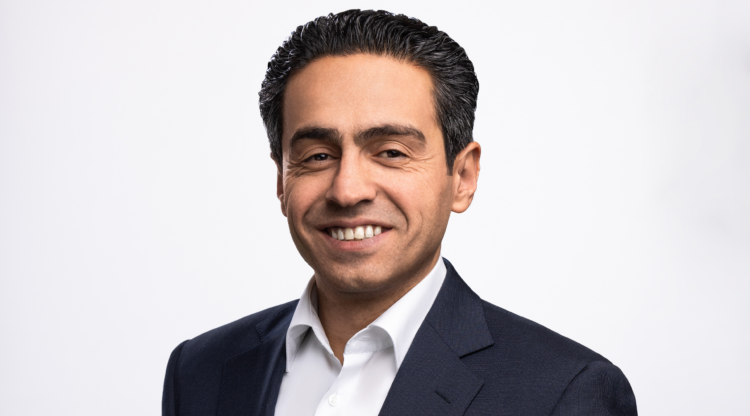
Ivan Durdevic
Co-Head of ETF Distribution at J.P. Morgan Asset Management
Ivan Durdevic, Managing Director, is Co-Head of ETF Distribution EMEA at J.P. Morgan Asset Management, based in Zurich. In this role, Ivan is responsible for leading and further developing J.P. Morgan Asset Management’s ETF business in the region. Before joining the firm in 2018, Ivan worked at Amundi for over 7 years; first as Senior Client Relationship Manager for ETF & Indexing in Germany, and more recently as Deputy Head of ETF, Indexing and Smart Beta Sales Switzerland. Previously, he was with BlackRock Germany as Senior Business Development Associate for iShares products and with NOMURA Bank Germany as Equity & Equity Linked Products Sales. The business economist started his career at INVESCO Germany.
__
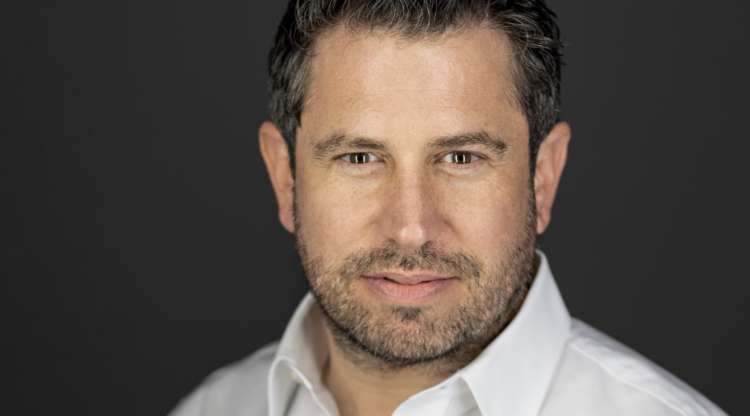
Tilmann Galler
Managing Director and Global Market Strategist at J.P. Morgan Asset Management
Tilmann is responsible for delivering research-driven insights on the global economy and markets to both retail and institutional clients in Germany, Austria, Switzerland and CEE. Prior to joining J.P. Morgan Asset Management, Tilmann spent six years at UBS Global Asset Management as a client portfolio manager managing equity and balanced mandates for institutional clients and he was a member of the European equity portfolio construction team. He also worked for Commerzbank Securities as an equity trader. Tilmann holds a diploma in business administration (BWL) of Hohenheim University. He is a certified EFFAS Financial Analyst (CEFA) and a CFA charterholder.