

 Opinion Leaders
Make your custody account «duty free»
-
BNP Paribas Markets
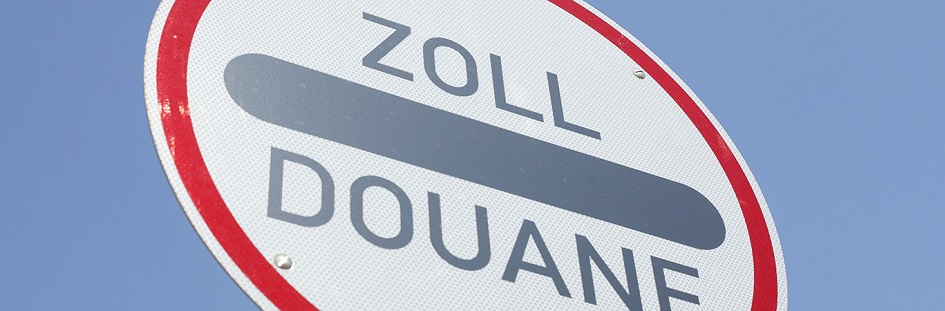
10% minimum on everything and a whole raft of higher tariffs – now they are here, Trump’s trade tariffs. They are roiling the stock market. It is high time to “tariff-proof” your portfolios.
The last few weeks have been almost unbeatable in terms of hiccups. First, US President Donald Trump announced an impressive list of trade tariffs, only to backtrack a few days later. It remains unclear why. Negotiating skills to bring his trading partners to their knees and extract concessions? Or chaos? The bottom line is that, for the time being, 10% on almost all imports to the US and a huge amount of uncertainty remain. Because what happens next is more or less written in the stars. The European Union and the US are said to be talking about a trade deal. It is possible that the Europeans will import more LNG from the US in the future, which could reduce the US trade deficit with Europe. However, some form of “base tariff” is likely to remain, as Trump also needs the revenue from tariffs to finance domestic tax giveaways to the population, say observers.
Economy under pressure
Of course, this also affects Switzerland. In principle, Swiss exports to the US are currently subject to an additional 10% tariff. However, according to an executive order signed by President Trump, the announced additional tariffs will initially not apply to a list of products. Pharmaceutical and chemical products and certain precious metals are exempt from the additional tariffs for the time being. It is unclear whether these products will be subject to tariffs in the future.
The impact of the tariffs on the Swiss economy is also unclear. The federal government’s expert group on economic forecasts recently lowered its forecast for Swiss economic growth in 2025 slightly to 1.4%. However, this was before Donald Trump’s tariff hike. Growth is therefore likely to fall, but by how much will depend on whether, when and to what extent the US government imposes sanctions on Swiss products. Regardless, it is clear that global trade is already suffering as a result of US tariff policy. This in itself diminishes the prospects for the Swiss economy.
Reallocation to “duty-safe” companies
The coming weeks could therefore be difficult for investors. Even though the stock market has recently rallied, the risk of a correction, an adjustment to the newly diminished growth prospects, is high. So it may not hurt to build up some cash here and there. And it certainly doesn’t hurt to ask yourself whether existing portfolio positions might be particularly affected by tariffs and therefore need to be reallocated. But which companies could you invest in? Which companies will be little or not at all affected by trade tariffs?
These can be broadly divided into three groups. First, companies that do not sell to the US, i.e. have no US operations, are not directly affected by the tariffs. Unless the global economy takes a major turn for the worse, the issue of trade tariffs could be over for them. In Switzerland, this is most likely to be the case for medium-sized and smaller companies. But beware: company size is not a sufficient argument. It is amazing how many medium-sized companies sell their products all over the world, including in the US. In any case, you should always look at the latest annual reports to see whether the company could be affected by the tariffs or not.
The second group includes companies that do business in the US but provide services rather than products. Insurance companies and banks, for example, are not directly affected by the tariffs – they do not export machinery, chocolate or tools. The new US trade tariffs are primarily tariffs on goods that can be touched.
A third group of companies are those that sell in the US but also manufacture a large proportion of their products there. These products are exempt from the tariffs. But be careful, not everyone who manufactures in the US can rejoice. The question is, what are these products made of? If they contain components sourced from abroad, which is usually the case with machinery and textiles, for example, they are likely to be affected by the tariffs even though they are made in the US.
Some examples of “duty-free” companies
On the European side, electronics giant Philips, network equipment supplier Nokia and household goods maker Reckitt are considered relatively “duty-safe” because they each have a large proportion of their production in the US. The same is true, to a lesser extent, of building materials manufacturer Heidelberg Materials and industrial gases specialist Air Liquide. In addition, as mentioned above, all service companies are generally considered to be somewhat immune to new trade tariffs. This includes insurance companies and banks.
But which Swiss companies can now breathe a sigh of relief because they not only sell their products in the US, but also manufacture a significant proportion of them there? Nestlé, for example, is a 90% local producer in the US, despite the high share of US sales. Companies such as Givaudan or Sika are also almost entirely local to the US, observers say. SGS and Kuehne + Nagel are also considered “tariff-proof” because they are service providers. However, if the global economy were to come under pressure, they too would be affected.
The situation for pharmaceutical stocks is unclear. Roche and Novartis are currently exempt from tariffs. However, special tariffs for pharmaceuticals are being considered in the US.
On the other hand, companies belonging to group one, i.e. those with little or no US business and primarily active in the domestic market, are considered relatively “tariff-proof”. Swisscom, for example, belongs to this group, as does Galenica. These are companies with a domestic focus and, if they operate abroad at all, only in neighbouring EU countries. Domestic real estate stocks, such as Swiss Prime Site, PSP Swiss Property and Allreal, are also “tariff winners”, if one can call them that. Another factor in their favour is the fact that interest rates are likely to fall further as a result of the economic slowdown, which would be good for the real estate market”. Shortly before this article was published on 25 April 2025, it was announced that Switzerland is one of a group of 15 countries with which the US apparently wants to find a quick solution to the tariff issue. The details and timetable are still unclear. So it remains exciting.