
 Interviews
Biotech on the rise: Why now is a crucial moment for investors
-

Serge Nussbaumer
Kapitalmarktexperte
Mr. Koch, which fundamental trends currently having the greatest impact on the attractiveness of biotech investments?
The long-term fundamentals of biotechnology are and will remain the key driver of the sector’s attractiveness. A growing and ageing global population ensures that demand for therapies for chronic and age-related diseases remains high. At the same time, the pace of scientific innovation is steadily increasing: advances in RNA drugs, novel biologics, targeted small molecules and data- and AI-supported research approaches are changing biomedical development in the long term and creating new value creation potential for years to come.
In addition, there is a structural industry trend that further increases the strategic importance of biotech innovators: The pharmaceutical industry is facing the biggest patent cliff in its history. At Merck & Co., around a third of the portfolio is affected, at Bristol Myers Squibb it is more than half. For many pharmaceutical companies, organic growth is no longer enough – without a clear acquisition strategy, there is a risk of losing competitiveness. The demand for differentiated, scientifically leading platforms, especially those with programs in late development phases, is growing accordingly.
These structural factors have an impact over several years and form the basis for why biotechnology is an attractive, innovation-driven investment segment, regardless of the short-term market environment.
Do you think that a particularly favorableis the right time to enter the biotech sector? If so, why?
Instead of relying on short-term signals, we are focusing on structural developments – and these are currently creating a favorable environment. Valuations are close to historic lows, although the fundamentals are clearly brightening. At the same time, falling financing costs following the first Fed interest rate cuts are easing the burden on the sector and making it easier for innovative companies to raise capital.
At the same time, M&A activity has increased significantly: strategic buyers are willing to pay substantial premiums for scientifically differentiated platforms. In addition, the regulatory and pricing environment is providing more visibility, as international pricing structures are adapting to new framework conditions such as customs duties and referencing.
How do you assess the current valuationsituation compared to previous market cycles?
The combination of a very solid operating performance of many core holdings and simultaneously depressed sector valuations is exceptional from a historical perspective. We are seeing scientific progress, increasing M&A activity and important clinical milestones – but these trends are only reflected in market prices with a time lag.
This discrepancy is particularly pronounced in the mid and small cap segment. Many of these companies continue to trade well below their historical valuation levels, despite clinically visible progress or validated platforms. In this segment in particular, valuations often react late because capital flows initially return to larger, more liquid stocks after correction phases.
In previous market cycles, precisely such phases often marked the transition to sustained periods of revaluation. The current situation is therefore similar to those moments in which fundamentals clearly lead the way and valuations – particularly in the mid and small cap segment – then follow suit disproportionately.
What role does artificial intelligence play in drug development and does it does it change the risk/reward profile of investments?
Artificial intelligence is fundamentally changing drug development. Data-driven research, AI-supported design and agent-based models enable companies to identify target structures more precisely, optimize drug candidates more quickly and model complex biological relationships in less time. This results in more robust hypotheses, clearer clinical strategies and often faster progress between early and late development phases.
AI is also playing an increasingly important role for us in portfolio management. AI-supported research systems improve our ability to identify opportunities at an early stage, manage risks in a targeted manner and evaluate scientific differentiation more precisely.
AI is changing the risk/reward profile of the entire sector, so to speak: not because it is replacing biology, but because it is strengthening it – through more precise models, faster iterations and a significantly higher quality of scientific decision-making.
How do you assess the quality and maturity of the current clinical pipelines? Assess Are we in a phase of extraordinary innovation?innovation?
We have seen a consistently high rate of innovation for years – but nothing that could be described as an exceptional phase. Even in times when the sector has underperformed, there have been fundamental scientific advances that were simply not reflected in the share price. Innovation is therefore much more stable than market sentiment.
Against this backdrop, the quality and maturity of many clinical pipelines is solid at the moment, especially as several programs are moving into important late-stage phases. We see a number of potential highlights, including upcoming approvals such as Agios Pharmaceuticals’ mitapivat in thalassemia, Biohaven’s troriluzole in spinocerebellar ataxia and Scholar Rock’s apitegromab in spinal muscular atrophy, as well as relevant Phase III or proof-of-concept data in areas such as sickle cell disease, cardiovascular diseases and neurological indications – including programs from Agios, Edgewise Therapeutics, Wave Life Sciences, Neurocrine Biosciences and Relay Therapeutics.
Will the M&A activity of the major pharmacompanies in the coming months tighten further? If so, why?
The last few months make me optimistic that this will be the case. A key indicator is that we have recently had several companies in our own portfolio that have been acquired – a clear sign that large pharmaceutical companies are specifically looking for differentiated, scientifically strong platforms.
In addition, we are also observing a very high level of transaction momentum outside of our portfolio: major takeovers worth billions have recently been announced in the market, including the transactions by Pfizer (Metsera), Roche (89bio), Genmab (Merus) and Merck (Verona Pharma). The reasons for this are obvious: organic growth alone is not enough for many pharmaceutical companies to secure their earnings targets in the long term, and companies without a clear acquisition strategy risk losing competitiveness. At the same time, numerous blockbusters are facing patent expiries, which further increases the pressure for external innovation. Against this backdrop, there is much to suggest that the M&A wave will not slow down, but rather intensify in the coming year.
In your opinion, are there certain indications or therapeutic areas that will be particularly in the coming years particularly benefit in the coming years?
We see strong structural momentum in areas with clear biological validation and high medical need. These include rare genetic diseases, neurological indications, cardiometabolic diseases and auto-immune diseases.
At the same time, RNA-based therapies, advanced antibody formats with extended
duration of action and new protein engineering approaches are gaining in importance. These fields combine clinical relevance with visible data catalysts and good commercialization opportunities.
Where do you see the greatest risks for investors – clinical, regulatory or financial?
The greatest risks continue to lie in the clinic, regulation and financing – albeit with very different weightings. Clinical risks remain clearly dominant. Even very convincing scientific hypotheses can be thwarted by negative or inconsistent study data, particularly in late-stage programs where expectations and evaluation levels are often high.
In regulatory terms, we are observing an increasingly selective and data-sensitive FDA. The agency is now placing a stronger focus on robust endpoints, clear evidence of efficacy and consistent safety profiles. This is particularly true for first-in-class therapies, accelerated approval pathways and programs that rely heavily on surrogate endpoints. At the same time, post-marketing requirements are becoming more frequent and more extensive. For companies, this means Well-designed studies, convincing clinical relevance and clean data quality are more important than ever. Programs that meet these requirements benefit from greater visibility and predictability. Others come under pressure more quickly due to additional requirements or delays.
Financial risks primarily affect companies without a sufficient capital base or without a clear roadmap to value-creating clinical turning points. The phase of subdued capital markets has shown how quickly financing conditions can tighten for highly innovative but not yet profitable companies.
This is precisely why we focus on companies with clear scientific differentiation, solid balance sheets and well-defined clinical catalysts. Although this profile does not eliminate all risks, it increases the likelihood that scientific innovations will actually be translated into sustainable value creation.
Which company sizes currently appear to be the most interesting – large caps, mid caps or rather small, highly innovative companies?
For us, the focus is less on the size of the company and more on a combination of qualitative factors: scientifically differentiated platforms, a solid capital base and visible clinical or commercial turning points with an attractive risk/return profile. Now we find this profile particularly in the mid-cap segment, to come back to capitalization. In other words, we are talking about companies that have already achieved strong scientific validation but still have sufficient upside potential to benefit disproportionately from clinical advances, approvals or market launches. The decisive factor is not size per se, but the combination of scientific maturity, capital strength and clear catalysts.
Which biotech stocks or segments are currentlyare currently “hot” in the industry and why?
RNA platforms, innovative antibody technologies, obesity programs and genetically defined rare diseases are currently receiving a lot of attention. These segments are considered “hot” because they combine strong clinical progress, clear endpoints and, in some cases, very large market potential. In addition, companies with visible late-stage clinical data or upcoming approval milestones are in focus – especially in an environment where strategic buyers are specifically looking for differentiated platforms.
Which three stocks do you see the greatest potential for the future? In other words, if you were only allowed to hold three stocks, which would they be?
I am fundamentally convinced by all the companies in our portfolio – otherwise they would not be in it. However, if I had to focus on three, I would choose those that currently demonstrate a very strong combination of scientific differentiation, clinical turning points and commercial momentum.
Ionis achieved several key milestones in the past quarter: positive Phase III data on olezarsen, confirmatory results on zilganersen and FDA approval of donidalorsen. These advances consolidate the company’s leading position in RNA-based medicine and create strong value drivers for the coming years.
Alnylam has a growing franchise in transthyretin amyloidosis and positive interim results from subsequent programs. The strong market penetration of Amvuttra underlines the commercial maturity and potential of the pipeline.
Argenx is experiencing continued high demand for Vyvgart – both intravenously and subcutaneously – and is driving global regulatory submissions for additional indications. This combination of broad application and growing market potential makes Argenx one of our most effective growth drivers.
Thank you very much.
__
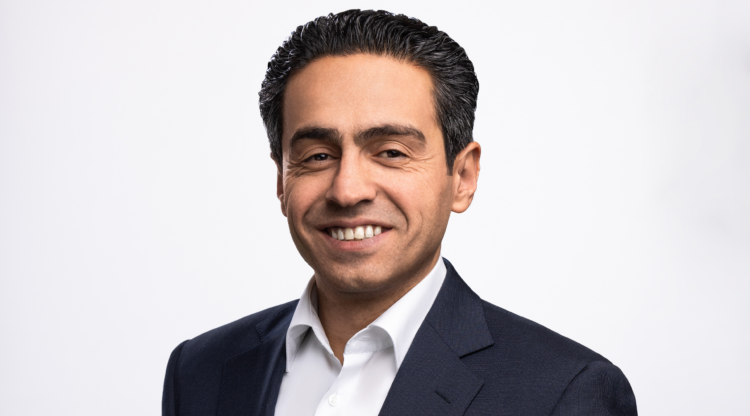
Dr. Christian Koch
Head BB Biotech & Executive Board Member at Bellevue Asset Management
Dr. Christian Koch has been with Bellevue Asset Management since 2014. From 2013-2014 he was sell-side pharma & biotech equity analyst at Bank am Bellevue in Küsnacht and from 2010-2013 Research Associate at the Institute of Pharmaceutical Sciences at ETH Zurich. He holds a PhD in Computer-Assisted Drug Design from the Pharmaceutical Institute at ETH Zurich and studied Bioinformatics at Goethe University Frankfurt.