
 Interviews
When the Space Race Becomes Investable
-

Susan Niederhöfer
Chefredakteurin
Space travel is a fascinating but also a speculative investment theme. Why does ZKB believe that the ‘space race’ is an investable theme today, rather than merely a vision of the future?
Contangelo: In our view, space travel is now much more than just a story of the future. The sector has undergone a fundamental transformation: from a handful of state-run organisations with budgets running into the billions to a dynamic growth sector within the private sector.
According to McKinsey, the space industry is growing by around 9% a year, which is faster than the global economy. Industry revenue is expected to triple to around USD 1.8 trillion by 2035. This growth is driven by existing business models such as satellite communications, Earth observation, navigation and, increasingly, security-related applications.
Since 2020, the number of operational satellites has more than quadrupled, rising from around 3,400 to an estimated 15,000 in early 2026. At the same time, launch costs have fallen significantly thanks to reusable rockets. These structural changes make space travel a tangible, measurable investment opportunity rather than merely a speculative vision of the future.
How has investor demand fared in a volatile environment characterised by tariffs, geopolitical tensions and shifting interest rate expectations? Is this precisely why interest in structured thematic solutions is on the rise?
Summermatter: In the current market environment, we are seeing increased demand for Structured Products. Significant market fluctuations present opportunities, as the relatively high implied volatility in certain pro-duct categories allows for attractive terms. The flexibility of these products is also a key advantage: they can be structured in such a way that investors can generate returns in any market phase.
Contangelo: We are observing two seemingly contradictory trends: the desire for stability and solid cash flows, and the need to capitalise on long-term structural growth areas.
Thematically focused, actively managed ETFs can bridge this gap. They allow investors to gain targeted exposure to clearly defined trends without having to manage individual stock risks themselves or constantly adjust their portfolio.
Interest is growing, particularly in the space sector. The potential IPO of SpaceX is attracting attention, whilst at the same time many investors are realising that a significant proportion of value creation is already taking place in commercial, profitable niche markets, such as satellite operators, data providers and infrastructure companies. In volatile markets, there is therefore growing demand for structured, curated exposure to such forward-looking sectors.
How does ZKB select the themes for new Tracker Certificates, and what specific considerations led to the launch of ORBITZ and SPACEZ?
Summermatter: We draw inspiration from a variety of sources. For example, we can draw on a wide range of expertise within ZKB, as in the case of the “Space Race” tracker, where our colleagues in Asset Management are taking the lead. However, we are also close to the market ourselves and monitor which developments or trends might be of interest to our clients. Furthermore, we are in close contact with our clients, who contribute their own ideas and for whom we develop bespoke investment solutions.
Contangelo: We select themes using a clearly structured process. Three questions are central to this: is it a long-term, structural trend with substantial economic relevance? Are there enough investable, listed and liquid companies to create a diversified product? And can the theme be clearly defined and presented in a way that investors can understand?
In the case of the “Space Race” – specifically ORBITZ (USD) and SPACEZ (CHF) – the decisive factor was that commercial space travel is already widely established today. According to PwC, around 80% of global space sector revenue comes from commercial activities such as satellite internet, Earth observation, geodata, navigation and security-related communications.
Our thinking: this sector is technologically exciting, economically relevant and, by now, offers a sufficiently broad range of investment opportunities through listed companies. An actively managed basket also makes it possible to dynamically reflect technological progress and the rapidly changing corporate landscape.
The key added value lies in the fundamental, active stock selection carried out by ZKB Asset Management. The experts analyse the quality, business model, valuation and thematic fit of the companies and manage the basket’s composition over time. Investors thus receive not a static thematic representation, but a curated, quality-oriented solution.
The Basket focuses on space travel and related value chains. Where do you draw the line between direct exposure to the space sector and indirect beneficiaries?
Contangelo: We distinguish between three categories: the core space sector, comprising businesses with directly linked business models such as satellite operators, launch service providers, component manufacturers and Earth observation providers; suppliers and infrastructure companies that provide essential technologies, materials or system solutions; and peripheral beneficiaries with only a marginal connection to the space sector.
In the Basket, we focus on the first two categories. The key criterion is a significant, clear stake in the space industry. We avoid companies that merely benefit indirectly, so as not to dilute the thematic focus.
The selection of shares, is fundamentally driven by a focus on quality, including free cash flow. But how important is profitability in a sector where many companies are still highly growth- and capital-intensive?
Contangelo: Profitability remains a key factor in the space sector as well, as many business models are capital-intensive. Our approach is two-pronged: firstly, we focus on sound fundamentals, such as balance sheet strength, transparency, clear cash flow paths and sensible capital allocation. Secondly, we differentiate according to business model and life cycle. We assess mature satellite operators or established suppliers differently from companies in early growth phases.
We only consider companies with low or negative profitability if their business model is scalable and there is a realistic path to positive cash flows. The key is a mix of high-growth, investment-intensive companies and established, cash-rich companies. This allows investors to benefit from the structural growth of the space industry. Quality and financial robustness remain central pillars.
In addition to pure-play space shares, the basket also includes industrial and technology shares such as Amazon, Parker Hannifin and Howmet Aerospace. Is this a deliberate strategy to make the sector more investable and less binary?
Contangelo: Yes, this is a deliberate choice. Whilst pure-play space companies offer high thematic beta, they are often volatile, dependent on individual programmes and, in some cases, not yet sustainably profitable. To complement this, we focus on established industrial and technology shares that supply key components, systems or services for the space industry.
This improves risk diversification, as the basket is less dependent on individual smaller shares. At the same time, larger, diversified companies with solid cash flows stabilise the portfolio without diluting its thematic focus. Thirdly, the mix enhances investability, as investors gain exposure not only to more speculative business models but also to quality shares with established market positions.
ORBITZ is denominated in USD, SPACEZ in CHF – which tranche is suitable for which type of investor, and what role does currency risk play for Swiss investors?
Summermatter: Our clients typically prefer investments denominated in CHF. However, the choice of investment currency and the approach to currency risk depend on the portfolio context: some investors hedge their foreign currency positions, whilst others deliberately accept them.
Contangelo: The difference lies in the denomination and, consequently, in the currency risk from the perspective of a Swiss investor. ORBITZ (USD) is aimed at investors who are specifically seeking exposure to the USD or who use the USD as a reference currency, such as institutional clients with global portfolios. SPACEZ (CHF) is suitable for investors who primarily invest in CHF and wish to reduce the deviation from their portfolio currency.
It is important to note that most of the underlying securities are quoted in USD or other foreign currencies. Even a CHF tranche therefore does not completely eliminate the economic currency risk. The extent to which Swiss investors factor this risk into their decisions depends on their overall allocation, risk tolerance and assessment of the USD. In thematic investments such as the “Space Race”, a certain degree of foreign currency exposure is often accepted as a satellite component.
Would SpaceX be automatically included in the basket following a potential IPO, or would the company first have to meet the same liquidity, quality and ESG criteria as all other constituents?
Contangelo: Given SpaceX’s key role in the space industry ecosystem and the appeal of an IPO, we would analyse the company very closely. Inclusion in the basket at a later date is certainly a possibility, provided the qualitative and liquidity-related requirements are met. However, this is not a foregone conclusion, as the decision is made as part of our established selection process.
The basket is managed dynamically and at the manager’s discretion. What events would typically trigger a rebalancing – valuations, technological milestones, geopolitical risks, liquidity or earnings revisions?
Contangelo: Rebalancing can be carried out on a scheduled basis or in response to specific events. Key triggers include significant changes in valuations or share prices, fundamental developments such as technological milestones, project delays, acquisitions or strategic realignments, geopolitical and regulatory risks, changes in liquidity, as well as earnings revisions, margin indicators or balance sheet signals.
Dynamic management makes it possible to incorporate new information on an ongoing basis and to ensure that the basket’s thematic focus remains clear.
The products will run until 29 May 2028, although the topic of space travel is likely to remain relevant beyond that date. Why was this maturity chosen, and are there plans for a new issue or a follow-up solution?
Contangelo: The maturity date of the end of May 2028 was chosen deliberately. It provides investors with a clear investment horizon and facilitates strategic allocation. At the same time, we expect key developments in satellite constellations, new launch systems and data and communications services to come to fruition by then. The fixed maturity date also ensures transparency in terms of conditions and administration.
It is very likely that spaceflight will continue to be relevant. This is the reason why we continuously evaluate whether a new issuance or a follow-up solution makes sense. Key factors include market trends, demand, and the further development of the investment universe. It is already foreseeeable today that spaceflight will not end in 2028, but will venture out into new facets and territories.
Finally, what other product-related initiatives is ZKB planning for 2026?
Contangelo: For 2026, we see several areas that are well suited to structured, actively managed solutions. In addition to space travel, these include selected segments of the energy transition, security and defence, automation and robotics, and data-driven infrastructure.
We only launch new products where we see a clear structural trend, a sufficiently broad investable universe and added value through active selection. We communicate specific themes gradually, once the analysis process and product structure have been finalised. Space is therefore one component of our broader range of focused thematic solutions, and not the only future-oriented sector we are involved in.
Summermatter: Structured Products are well suited to quickly translating specific themes into investment solutions. This has recently been demonstrated in the case of electricity infrastructure, which is emerging as a major trend in the wake of electrification and is therefore attracting interest from clients. We have also incorporated this theme into a Tracker Certificate.
Thank you very much for the interview!
__
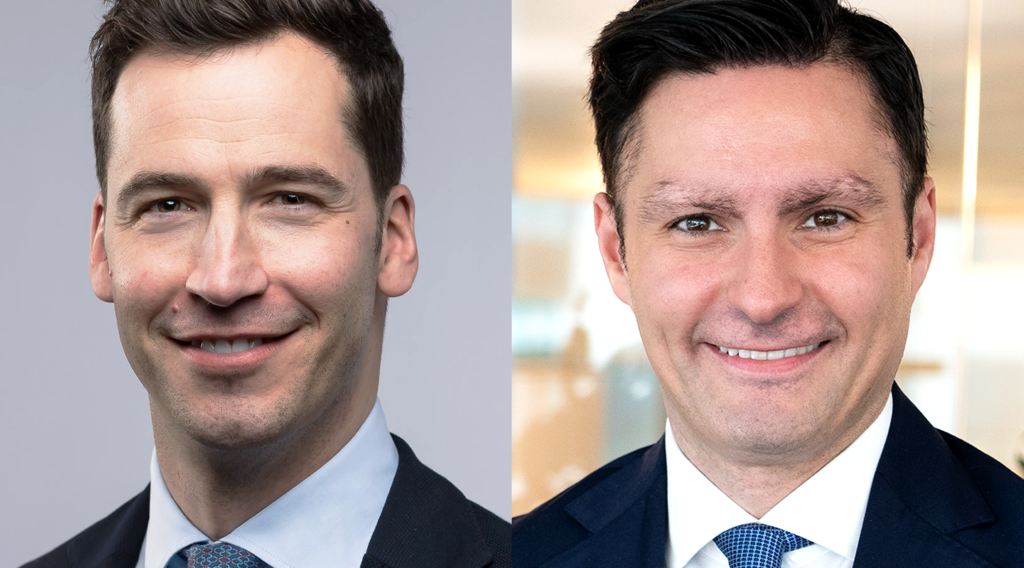
Curdin Summermatter
Head Sales of Structured Products, Zürcher Kantonalbank
Curdin Summermatter has worked in the Structured Products division of Zürcher Kantonalbank since 2007. Since 2015, he has headed up Structured Products sales as a member of the Executive Board. Prior to this, he held positions in various departments within the bank. Curdin Summermatter is a member of the Structured Products Commission at Swiss Exchange SIX and serves on the Standards Working Group of the Swiss Structured Products Association. A graduate in business administration and a Chartered Investment Analyst (CIIA), he holds an MBA from the University of Chicago.
__
Rocchino Contangelo
Head of Buy-Side Research Asset Management, Zürcher Kantonalbank
Rocchino Contangelo is Head of Buy-Side Research within the Asset Management division of Zürcher Kantonalbank, where he has worked since 2014. In addition to buy-side research, he is also responsible for global investment stewardship activities in the equities sector and chairs the Executive Panel of the Asset Management ESG Committee. Before joining Zürcher Kantonalbank, he held various positions at Zurich, UBS, Kepler & Mainfirst and other asset managers. Rocchino Contangelo holds a degree in Finance from the London School of Economics and has completed further training to become a Certified ESG Analyst (CESGA), CPEP, CHP and CFMS.
__
Legal notices
This communication is for promotional purposes only. It is not to be intended as an offer or a solicitation to make an offer to buy or subscribe for securities, nor does it constitute investment advice. Before making an investment decision, you should consult your advisers. Forward-looking statements are subject to known and unknown risks, uncertainties and other factors that may cause the issuer’s actual results, financial position, development or performance to differ materially from those expressly or implicitly assumed in such statements. The content of this document has not been prepared by the “Financial Analysis” department within the meaning of the “Guidelines for Ensuring the Independence of Financial Analysis” issued by the Swiss Bankers Association and, therefore, does not constitute independent financial analysis. Where Structured Products are mentioned in this communication, the base prospectus, the final terms and conditions, and any key information document may be obtained free of charge from Zürcher Kantonalbank, Bahnhofstrasse 9, 8001 Zurich, Switzerland, VRIS Department, or via zkb-finance.mdgms.com. © 2026 Zürcher Kantonalbank. All rights reserved.