
 Interviews
Smarter Leverage: Why ETFs Are Gaining Attention Now
-

Serge Nussbaumer
Kapitalmarktexperte
Mr. Böhler, you have been offering leverage products on ETFs since mid-May. Which customer benefits are being addressed?
The market offers a variety of ETFs that give investors access to different regions or sectors. Our leverage products on these ETFs now enable investors to leverage this access if the investor’s market expectations and risk appetite allow it. Previously, it was not possible to participate leveraged in the performance of many regions or sectors. Now investors can add a leveraged position on the MSCI World or MSCI India, to mention two examples, to their portfolio.
Why use an ETF as the underlying and not the index directly?
Indices are not always tradable in the same way as an ETF. We are not talking about an SMI or DAX index here. Some of our leveraged products leverage the performance of indices that are closed during our trading hours. Thanks to the ETF as the underlying, we can offer leveraged products on these indices during Swiss trading hours. Furthermore, the pricing is more transparent for Swiss investors as the price of the leveraged product replicates the performance of the local ETF in leveraged form. This means that a knock-out can only take place during local trading hours. These points lead to more transparent pricing.
ETFs are available from various providers, what criteria are used to selection for one of your leverage products?
The first step is to select an exciting theme or an interesting index. We then compare the tradability, liquidity and costs of the product. We try to anticipate which themes might be of interest to our investors and where there is a need to take corresponding leveraged positions.
With a product based on an ETF, the issue of higher costs comes up very quickly. What is the situation with your leverage products?
One of the key features of ETFs, and a major reason for their success, is their inherently very low costs, which are often only a few basis points per year. These costs are collected by the ETF provider and not by the issuer of the leveraged product. Therefore, these are not additional sources of income for us. These costs are borne by the investors. However, it is market standard that management fees are charged for indices or other passively managed products. These can often be higher than the ETF management fees.
Knock-out warrants on the MSCI World ETF and the Russell 2000 ETF will be available from May 26, 2025. Are other ETFs planned as underlyings?
Yes, but I don’t want to let the cat out of the bag just yet. We have had good demand for the first leveraged products on ETFs and we are actively working on expanding our offering. Suggestions from investors are always welcome, as they make our job much easier.
Thank you very much.
__
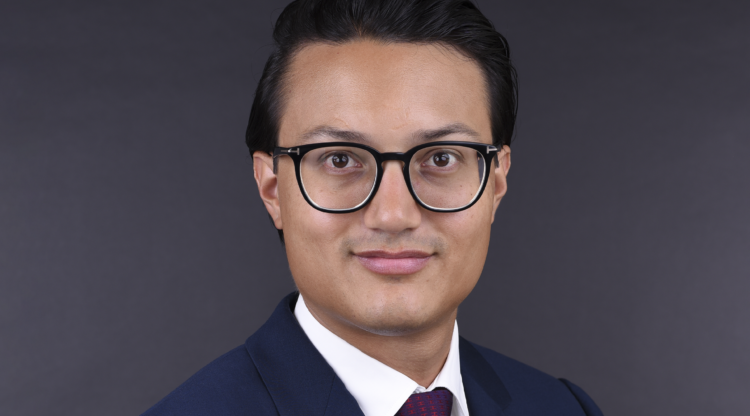
Dominique Böhler
Head of Public Distribution Switzerland, Société Générale
Dominique Böhler began his career in structured products in 2004 at Dresdner Kleinwort. He was responsible for the public distribution of structured products in France. In 2009, he moved to Commerzbank in Switzerland, where his area of responsibility was expanded to include ETFs. He is a member of various industry associations. He has been with Société Générale since January 2020.