
 Interviews
The Global Race for Rare Earths
-

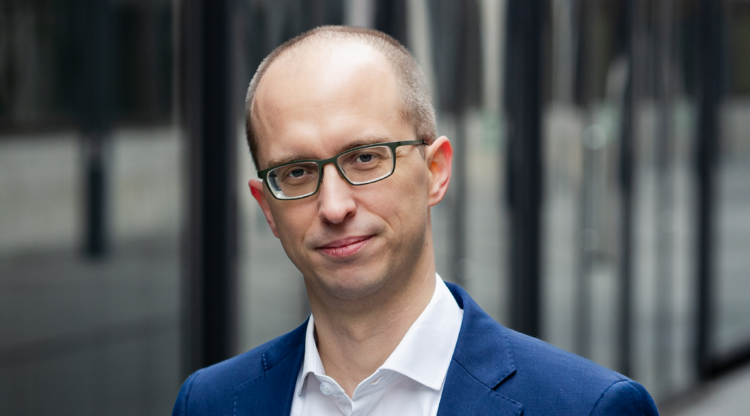
Serge Nussbaumer
Kapitalmarktexperte
China has dominated the global market for rare earths for decades – from mining to processing.
What are rare earths and why are they so crucial for modern technologies?
The rare earth metals include a total of 17 elements, such as scandium, praseodymium, cerium, dysprosium and neodymium. The properties of the individual metals differ – they are grouped together under the collective term because they often occur together. The so-called technology metals do not belong to the rare earths, but are of equally great economic importance, as they are used to manufacture a wide range of technological products such as semiconductors, lasers or glass fibers. These primarily include gallium, germanium, hafnium, indium and terbium.
How has the global importance of rare earths changed in the last decade?
Rare earths and technology metals have become an integral part of business and technology. Due to their unique properties, they are widely used in electronics, industry, chemistry, medicine, defense and especially in the field of renewable energies. Demand has recently been fueled in particular by semiconductors, wind power and the rapid rise of electromobility.
What role does China play in the global market for rare earths? How dependent is the West on Chinese exports?
China has dominated the global market for rare earths for decades and controls almost the entire value chain from mining to processing. By 2023, 99% of the global processing of heavy rare earth metals will take place in China. Even western mines such as Mountain Pass deliver there. The West therefore remains highly dependent on Chinese exports and capacities.
What direct influence does the trade war between the USA and China have on the prices and availability of rare earth metals?
In April 2025, China significantly tightened its export controls for rare earths in the wake of the escalating trade conflict with the USA. In response to new US punitive tariffs, Beijing introduced a licensing requirement for the export of seven critical metals such as dysprosium, terbium and yttrium. Although this is not an official export ban, the license requirement allows for targeted delays or blockades. Prices have risen sharply due to the uncertain supply situation.
Have there been any strategic reactions from the USA, the EU or even Switzerland to China’s dominance in the rare earths sector?
Yes, there are strategic responses to China’s dominance. In the US, laws such as the «Inflation Reduction Act» and the «CHIPS and Science Act» specifically promote the development of domestic supply chains for critical raw materials. Subsidies and tax incentives support investment in domestic processing. In addition, partnerships have been established with countries such as Australia and Canada for diversification. In Europe, the Critical Raw Materials Act was passed in 2023 with the aim of significantly reducing dependence on China by 2030. Switzerland is participating in the EU initiatives and is increasingly focusing on research to reduce its own dependence on rare earths.
What role do rare earths play as a geopolitical instrument for China?
China can use rare earths as geopolitical leverage at any time – and has already demonstrated this in the past. Export restrictions and technological dependencies provide China with an effective instrument for exerting international pressure.
How will the demand for rare earths develop with the expansion of electric vehicles, wind turbines and digital technologies?
Demand for rare earths is expected to increase significantly in the coming years – primarily due to the expansion of electric vehicles, wind power and digital technologies. Magnetic metals such as neodymium, praseodymium, dysprosium and terbium, which are essential for powerful permanent magnets in electric motors and wind generators, are particularly in demand. Depending on the scenario, the IEA anticipates a strong increase in demand.
Is there a geographical relocation of production or the construction of new production facilities?
There is a moderate geographical shift in the rare earths sector, with China initially dominating both in terms of extraction (62%) and refining (92%). By 2030, the share of the three largest producing countries is likely to fall from 85% to 81%. Australia (18%) and the USA (7%) are gaining in importance, while Myanmar remains politically tense. Ukraine is also coming into focus: with deposits of lanthanum, cerium, neodymium, erbium and yttrium and the raw materials agreement with the USA, the country could contribute to a further diversification of the producing countries. China will remain the leader in refining until 2030 despite a decline in market share to 77%. Malaysia (increase from 5% to 12%) as well as the USA, Australia, France, Norway and Estonia will continue to expand their capacities. However, processing remains highly concentrated and industrial use, e.g. in magnets, is still underdeveloped outside China.
Which countries are currently investing heavily in the mining or processing of rare earths?
Several countries are making targeted investments in the mining and processing of rare earths in order to reduce their dependence on China. The USA is pursuing projects in Texas and California, focusing increasingly on recycling and expanding strategic partnerships – with the aim of establishing its own processing facilities and strengthening the entire supply chain. Australia is strengthening its position through Lynas Rare Earths, the largest non-Chinese producer, which is also active in Malaysia. Canada is promoting projects in Quebec and the North and supporting the expansion of the entire processing chain. In Europe, countries such as Norway, Sweden and Estonia are increasingly investing along the entire value chain. Vietnam and Brazil are also stepping up their activities – with a focus on their own storage facilities and local processing.
Where are the biggest bottlenecks in the supply chain for rare earths at the moment?
The biggest bottlenecks for rare earths currently exist in the complex chemical separation and refining process – especially for the heavy elements. Although several countries have relevant deposits, there is often a lack of the necessary processing capacity. One example is the US company MP Materials: it operates the Mountain Pass Mine, but still has to export the extracted material to China for further processing.
How will the market for rare earths develop over the next five years?
Rare earths, which are used in permanent magnets, are the most important economic application and accounted for around 78% of global trade volume in 2023. In terms of value, this share could rise to 90% by 2034. Delays in new projects, slow growth in Chinese export quotas and rising demand from future technologies could further exacerbate the supply situation. Many extraction projects are considered uneconomical at current spot prices, which leads to price sensitivity in the short term. In the long term, however, the outlook remains positive – driven by structural demand trends such as electromobility, wind power and defense.
Maverix Securities is the strategy manager for an actively managed certificate (AMC) on this theme, why should the interested investor invest in it?
The certificate offers professional investors the opportunity to benefit from a potential price increase in technology metals and an impending shortage of rare earths. Particularly noteworthy is the physical storage of the metals – to our knowledge the only product in Switzerland where both technology metals and rare earths are actually deposited in a duty-free warehouse. This not only enables targeted diversification in the portfolio, but also a potential decorrelation to traditional asset classes such as equities or bonds. In geopolitical or inflationary market phases, physical commodities can also act as a stabilizing factor in the overall portfolio.
Thank you very much!
–
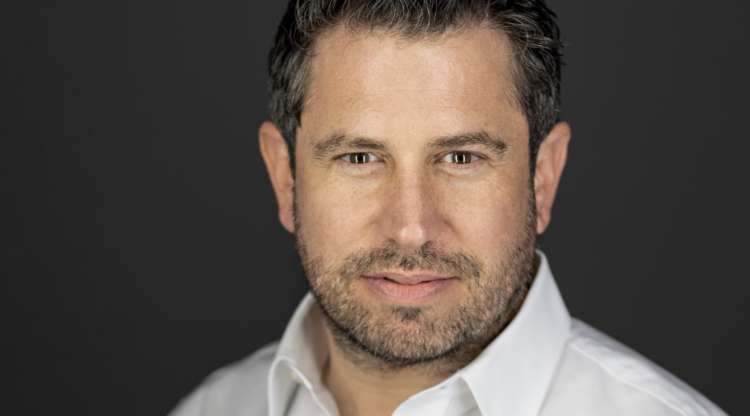
Maurizio Porfiri has been Chief Investment Officer at Maverix Securities since 2020. In this role, he manages the company’s investment strategy, analyzes the financial markets and develops innovative and tailor-made investment solutions.